Food Items You Should Stock Up on in Case of an Emergency
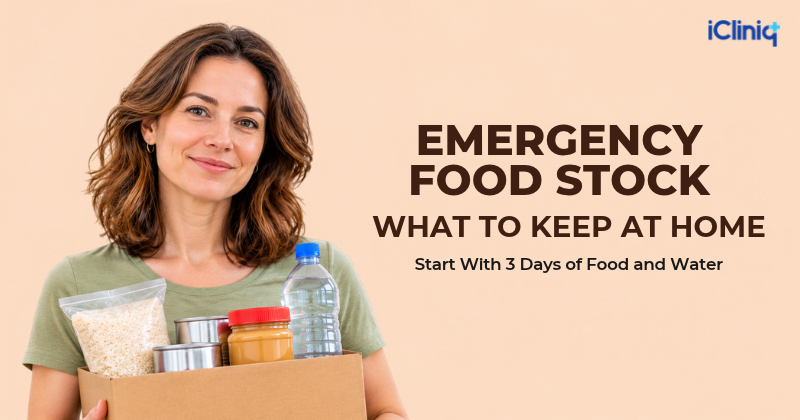
Heavy rain, floods, power cuts, or supply delays can make everyday shopping difficult. A few simple food choices can help your family stay prepared.
Emergencies do not always come with a warning. A flooded road or a long power cut can make it difficult to buy groceries.
The good thing is, you do not need to buy expensive survival food. Most of the things you need may already be in your kitchen.
A good place to start is 3 days of food and water for every family member. If possible, slowly build this up to 2 weeks.
Here are some foods worth keeping at home.
Rice, Wheat, and Other Grains
Rice, wheat flour, oats, and pasta are good to keep at home. They can be used to make simple meals and also give you energy.
Keep them in a dry place in airtight containers. Make sure there is no moisture or insects around them.
Choose foods your family already eats. There is no need to buy a lot of new or unfamiliar foods.
Dal, Pulses, and Beans
Dal, lentils, chickpeas, and beans are good options to keep at home. They also give you protein and can be stored for a long time.
You can keep some dried pulses as well as a few ready-to-eat foods. Dried pulses need water and cooking, so ready-to-eat foods can be helpful if there is no gas or electricity.
Canned Fruits and Vegetables
Canned foods can be useful when fresh fruits and vegetables are not available.
When you buy these foods, you can choose ones with less added salt or sugar. Check the expiry date and storage instructions.
Check the can before. Do not eat food from a can that is swollen, leaking, badly rusted, or badly damaged. If you keep canned food at home, keep a manual can opener too. It can come in handy during a power cut or an emergency.
Nuts, Seeds, and Dried Fruits
Peanuts, almonds, raisins, and seeds are easy snacks and do not need cooking.
Food needs to be fresh, so keep it in a closed container. Before buying them, check if anyone at home is allergic to nuts or seeds.
For young children, it is better not to give whole nuts. It can get stuck in the child's mouth and may cause choking.
Milk and Other Protein Foods
When preparing for emergencies, it’s a good idea to keep foods like powdered milk, long-life milk, peanut butter, and canned or ready-to-eat beans at home.
These foods give you protein and calories if you can’t get fresh food.
If you use powdered milk, follow the instructions on the packet and mix it with clean, safe water.
Keep Enough Drinking Water
Food is important, but clean water is even more important.
A common emergency guideline is about 3.8 liters, or 8.4 pounds, of water per person per day.
That means:
- 1 person for 3 days: About 25.1 pounds
- 2 people for 3 days: About 50.1 pounds
- 4 people for 3 days: About 100.1 pounds
This is only a general guideline. During sickness, more water is needed. It is advisable to store the water in clean, safe containers and sealed bottles.
Store Food Safely
Buying food is only one part. But keeping it safe is mandatory.
Keep food in a cool and dry place. Use the older food first and replace it as you use it.
Check your supplies every few months. Remove anything that is expired, damaged, or no longer good to use.
Also keep some foods that need little or no cooking. This can help during a power cut or when cooking gas is not available.
The Bottom Line
You do not need to fill your home with food to prepare for an emergency.
Start with 3 days of familiar food and clean water for every family member. If you can, slowly build up the supply to 2 weeks.
Keep foods your family already eats, store them properly, and check them every few months.
Plan it in advance so it's easier in case of any emergency.
Stay prepared. Stay safe.