The Problem With Googling Symptoms (and What Patients Actually Need Instead)
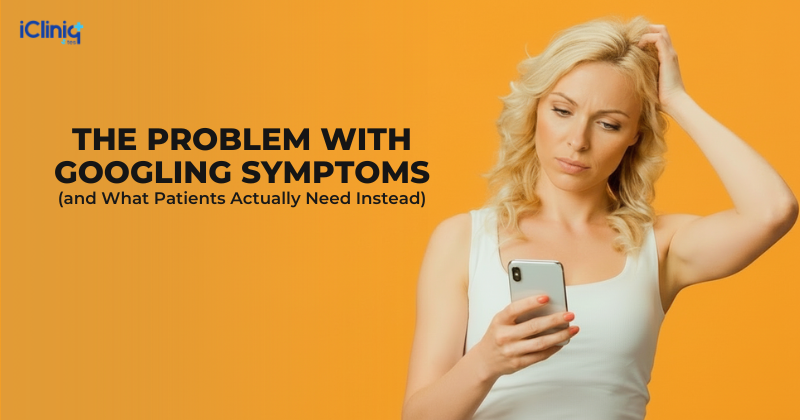
In the middle of the night, when a new symptom appears or an existing one feels worse, most people do the same thing: they search online. What begins as a simple question, Why do I have this pain? Is this serious? Should I be worried?, often leads to pages of conflicting information, worst-case scenarios, and more anxiety than clarity.
The internet has made health information more accessible than ever before. Yet for many people, access has not translated into understanding. Instead, it has created a new problem: information without context. Symptoms that are common and usually harmless can appear alarming when viewed through fragmented search results. Rare conditions are presented alongside everyday explanations, and without clinical framing, it becomes difficult to know what truly matters and what does not.
For patients and caregivers, this can lead to three familiar yet uncertain outcomes:
1. Anxiety Instead of Reassurance
Online searches tend to surface the most serious possibilities first. While intended to be comprehensive, this structure often amplifies fear rather than providing proportionate guidance. People leave with more questions than answers, unsure whether to seek urgent care or simply monitor symptoms.
2. Fragmented, Unstructured Information
Medical information online is rarely organized in a way that reflects how clinicians actually think. A physician does not evaluate a symptom in isolation; they consider context, duration, associated features, and risk factors. Most search results present disconnected facts without explaining how to interpret them safely.
3. Delayed or Misguided Care
Confusion can delay appropriate care or lead to unnecessary visits. Some people ignore warning signs because they assume a symptom is minor. Others seek emergency care for concerns that could have been calmly monitored. Both scenarios reflect the same underlying gap: the absence of a structured, medically guided understanding at the moment questions arise.
What Patients Are Really Looking For
When people search for health information, they are not simply looking for definitions. They are looking for orientation. They want to know:
- What could this symptom mean in general terms?
- What signs should prompt attention?
- What can safely be monitored?
- What next step makes sense right now?
In clinical practice, this process is called triage thinking, the structured approach used to determine urgency, possible causes, and appropriate next steps. It is calm, contextual, and grounded in probability rather than extremes. Yet this type of reasoning is largely absent from traditional online search experiences.
As a result, patients are often left navigating health concerns without the framework clinicians rely on every day.
Why This Matters Now
Healthcare systems worldwide are facing increasing demand, longer wait times, and growing information overload. At the same time, people expect answers quickly and understandably. The gap between when a question arises and when professional guidance is available has become more visible.
This gap does not require replacing clinicians. It requires better first-layer understanding and tools that help people interpret information responsibly, recognize warning signs, and approach healthcare decisions with clarity rather than panic.
Improving this early stage of understanding can:
- Reduce unnecessary anxiety
- Support appropriate care-seeking
- Improve health literacy
- Help patients communicate more effectively with their doctors
In short, it can make healthcare interactions more informed and productive.
Toward a More Structured Way of Understanding Symptoms
The future of health information is not simply more content. It is better-structured guidance and information that mirrors how clinicians reason, presented in clear, human language. This means offering context, outlining possibilities responsibly, and indicating when professional evaluation is important.
Digital health tools are increasingly being designed to support this need. When built responsibly, they can provide a calm first point of understanding: not diagnoses, not definitive answers, but a structured orientation that helps people think clearly about next steps.
This shift represents an evolution in how health information is delivered. Instead of overwhelming users with possibilities, the goal is to provide grounded explanations that educate, reassure, and guide responsibly.
A Better First Step
People will continue to seek information the moment questions arise. That behavior is unlikely to change. What can change is the quality of guidance available in that moment. The next generation of health intelligence tools aims to offer something the internet has long lacked: clinically grounded, structured explanations that help people understand rather than panic.
In the coming article, we will introduce how this approach is being applied through AskTES.ai, an AI-powered medical intelligence system designed to provide clear, responsible health guidance while reinforcing the role of qualified healthcare professionals.
Because better decisions begin with better understanding, and understanding should not be the hardest part of seeking care.