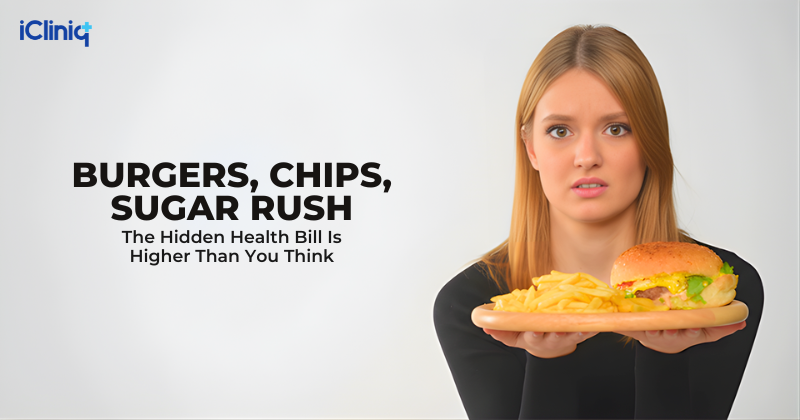
Burgers, Chips, Sugar Rush: The Hidden Health Bill Is Higher Than You Think

The Convenience That Hooks Us
Burgers on busy days. Chips during movie nights. Sugary drinks to beat the afternoon slump.
Ultra-processed foods are convenient and easily available, which makes them a regular part of many people’s diets. To make these foods even more appealing, manufacturers carefully combine sugar, salt, and fat to create flavors that are hard to resist. Strong marketing only adds to their appeal.
But while these foods offer quick satisfaction, the long-term health cost can be significant.
Why Ultra-Processed Foods Are Hard to Resist
Many ultra-processed foods are designed to keep you coming back for more. The combination of sugar, salt, and fat stimulates the brain’s reward system, making these foods highly satisfying in the moment.
Over time, frequent consumption of fast food and packaged snacks can influence eating habits and gradually replace healthier food choices.
The Rising Risk of Chronic Diseases
Regular consumption of ultra-processed foods has been linked to several chronic health conditions, including obesity, type 2 diabetes, heart disease, and fatty liver disease.
Sugary foods and beverages can cause rapid spikes in blood sugar levels. While this may provide a short burst of energy, repeated spikes can strain the body’s insulin response and increase the risk of developing diabetes over time.
The Impact of Excess Salt and Unhealthy Fats
Processed foods often contain high levels of sodium, which can raise blood pressure and put additional strain on the heart.
In addition, unhealthy trans fats and saturated fats contribute to cholesterol buildup in the arteries. Over time, this increases the risk of heart attacks and strokes.
Effects Beyond Physical Health
The effects of ultra-processed foods are not limited to physical health. Diets high in these foods have also been associated with mood disorders, fatigue, poor sleep, and difficulty concentrating.
The brain relies on balanced nutrition to function properly, not just calorie intake.
The Hidden Health Bill Adds Up Over Time
The health impact of ultra-processed foods often builds gradually.
A fast-food meal here. A packaged snack there. Frequent eating out over the years.
These small choices can accumulate over time and increase the risk of developing chronic health conditions.
Small Changes Can Protect Your Health
The encouraging news is that small dietary changes can make a meaningful difference.
Choosing water instead of sugary drinks, replacing fried snacks with fruit or nuts, cooking at home more often, and paying attention to food labels are simple steps that can support better health.
Prioritizing whole foods such as vegetables, legumes, whole grains, lean proteins, and healthy fats can also help create a more balanced diet.
Awareness Is the First Step
You don’t have to eliminate every indulgence from your diet. Occasional treats are part of a balanced lifestyle.
However, being aware of what you eat and making thoughtful choices can go a long way in protecting your long-term health.
Because while fast food may seem affordable today, your health in the long run is far more valuable.